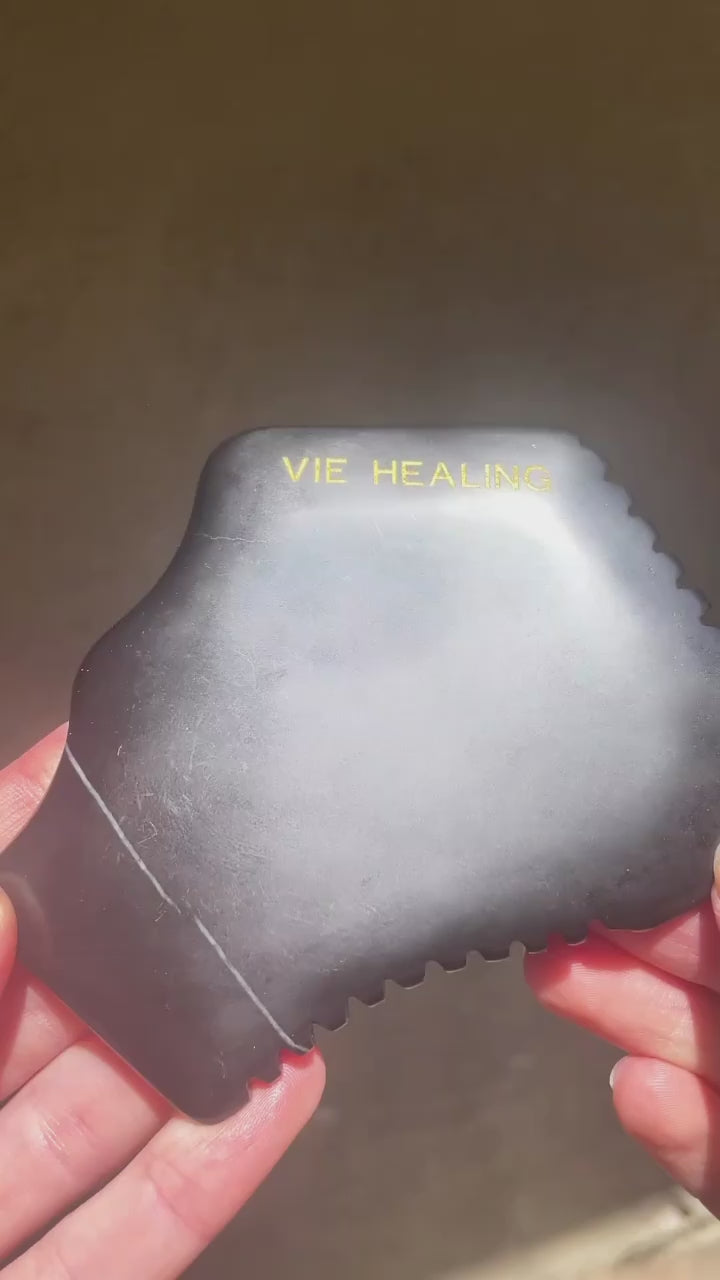
Carved from prized bian stone. The body's gua sha.
As seen in
Vogue · Allure · Harper's Bazaar
The Bian Stone Gua Sha is the body's stone — carved from prized bian, the densest, oldest stone in the TCM lineage, used for centuries to release tension that lives deeper than the face.
For the neck that holds the day. For the shoulders. For the lower back. For the inner thighs and the iliotibial band. The stone the body responds to.
Why bian stone
Bian stone is one of the four traditional TCM "treasure stones," prized for its mineral density and its capacity to retain warmth or coolness for sustained therapeutic work. It's denser than jade or rose quartz, which is why it's the body stone — the right tool for fascia, knots, and the deeper muscular work the face doesn't need.
The practice, in three movements
i.Apply body oil. The stone glides best with slip.
ii.Scrape firmly along the muscle, in one direction, 5–10 passes per area.
iii.Drain toward the nearest lymph node. Hydrate after.
What's inside
- Genuine bian stone gua sha tool
- Velvet storage pouch
- Illustrated practice guide
Free shipping on orders over $50.
30-day returns on unused tools.
Questions, answered
Will I see redness on my skin after?
Possibly. The redness (called "sha" in TCM) is microcirculation rising to the surface — it's the visible sign that stagnation moved. It typically fades within a few hours. Lighter pressure for less redness.
Can I use this on my face?
Possible but not recommended — bian stone is denser than the face needs. Use rose quartz or jade for facial work. Bian is the body stone.
How is bian stone different from rose quartz or jade?
Bian is denser, heavier, and built for deep body work. Rose quartz stays cool for facial de-puffing. Jade warms with the skin for evening facial work. Each stone, a different purpose.
How often should I use it?
A few times a week is plenty for body work. Allow time between sessions for the body to integrate.
Is it safe for sensitive bodies?
Use lighter pressure if sensitive. Avoid over varicose veins, fresh injury, broken skin, or during pregnancy without practitioner guidance.
Carved from genuine bian stone. Hand-finished.